
Q&A with Chris Mears: 35 Years at the Forefront of Financial Services
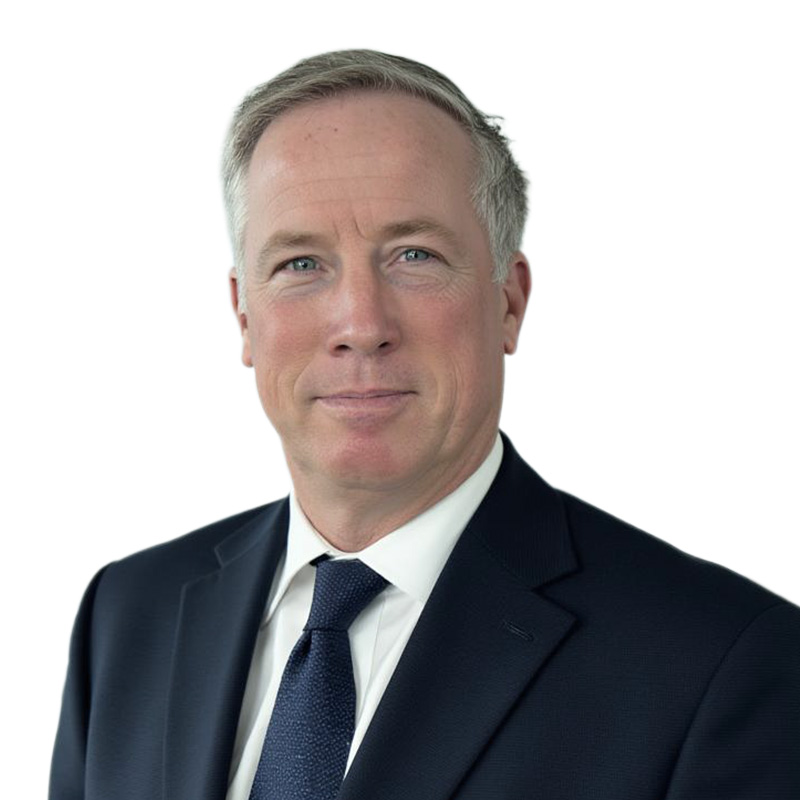 A great deal has changed in the accounting and asset management landscape over the course of Christopher Mears’ career. Few advisors, however, have experienced the sector’s evolution as directly or as comprehensively.
Over more than three decades, Chris has built and led practices in an industry that has grown more complex, more regulated, and more competitive with each passing cycle. His career spans the full breadth of the alternative investment landscape, where he has built and led practices at both Big 4 and mid-sized firms, advising high-performing investment managers and fund structures.
In this Beyond the Bio feature, Grassi Partner and Financial Services Practice Leader Chris Mears shares his perspective on how the industry has evolved, the challenges clients face today, and the principles that guide him in work and in life.
Q: How have you seen the financial services and asset management sector evolve over your career?
A: When I first started, alternative investments were viewed as the “Wild West.” A lot of people didn’t understand them, similar to how the cryptocurrency industry is viewed today.
Over time, the industry has matured significantly, with more regulation, more competition, and far greater transparency. Investors today have more choices than ever, and managers have to work harder to stand out.
Q: What are the most significant challenges facing asset managers and investment firms today?
A: The biggest challenges continue to be capital raising and the search for alpha, the return above the market. Managers need to clearly articulate how they differentiate themselves and back that up with consistent returns to attract capital.
On the alpha side, hedge funds are facing increasingly crowded trades, as many funds invest in the same issuers at the same time, compressing returns. In private equity, firms are feeling pressure from investors to sell positions and return capital, even as deal pricing has made exits more difficult.
Managers also need to be best-in-class at running their businesses. That means getting structure, operations, and tax efficiency right, not just to meet requirements, but to support better decision‑making, so that investors can focus on performance rather than operational fundamentals.
Q: What do you believe clients value most in an advisor today?
A: Clients value experience and access. Many have worked with larger firms and appreciate the depth that comes from advisors who have seen the industry at scale and across multiple cycles. At the same time, they want engagement that feels personal, with an advisor who understands their business and is directly involved in problem-solving. They want that expertise delivered through a high-touch, client-centric approach, with guidance that adds value beyond compliance.
Q: What keeps you engaged in the industry after 35 years?
A: The people. Asset management attracts some of the brightest professionals in the world, and the pace of the industry reflects that. When clients call, they expect answers that are fast, correct, and grounded in an understanding of their broader goals. That level of expectation keeps the work challenging and engaging.
Q: How would you describe your leadership philosophy?
A: I’m a roll‑up‑your‑sleeves leader. I like to work side by side with my teams to drive process improvement and teach from the ground up. One of the best compliments I’ve ever received came from a client who noticed that I treat everyone the same, whether I’m socializing with someone in the mailroom or having dinner with the CEO. To me, that is what authentic leadership looks like.
In this profession, you have to be a five‑tool player: technician, trainer, teacher, business developer, and business owner. You must demonstrate all five to earn credibility.
Q: What advice would you give to someone early in their career?
A: This profession is an apprenticeship. You start as a doer, then move to teacher, then manager, and eventually owner. Being a strong technician is table stakes. What helps you advance into leadership is developing your soft skills, how you communicate and how you build relationships. Some people shy away from that part of the career, but it’s an accelerator.
Q: What is your approach to business development?
A: People think you need charisma to be successful in business development. That is just not the case. The key is consistency. You need a process that keeps you visible in the marketplace. Do as little talking as possible, ask good questions, understand where people need help, and think about how you can add value. The relationship follows from there.
Q: How do you stay ahead of emerging trends?
A: I read constantly. Industry publications, the Wall Street Journal, and original regulatory releases. When new requirements come out, I read the source material, not just the summaries. I want to understand what regulators are trying to accomplish.
I also make a point of asking clients about their top priorities over the next six to twelve months. After enough conversations, patterns start to emerge. That perspective, built across an entire client base, is one of the most valuable things you can bring to a conversation.
Q: What do you see ahead for the industry?
A: Consolidation will continue. The big shops will keep getting bigger. But some of the more interesting changes are coming from outside the industry altogether.
I said at a conference a few years ago that professional services firms would start looking more like technology companies, and I believe that is coming for asset management, too. I predict that well‑known technology companies are going to enter this space, bringing AI‑powered trading and wealth management. In five years, you will be managing investments through them on your phone.
Q: What is the most powerful piece of advice you have received?
A: Treat your family like clients. I’m a father of six boys, and the moments that matter most go on my calendar with the same priority as a client meeting. Learning how to manage that flexibility and building the right support system takes time, but it’s critical.
Q: What legacy do you want to create?
A: Two things motivate me when I think about my legacy: solving problems for clients and helping people build their careers. As a Partner, I have a stewardship mindset. My goal has always been to coach and mentor team members toward ownership, or at a minimum, help them become the best version of themselves professionally. That is what keeps a firm thriving.
Fun Facts:
Chris is a father of six boys ranging from ages 6 to 31 and his spouse is a Partner at another accounting firm. Chris is a self‑described golf fanatic with a putting green in his own backyard. He learned the game at age nine while spending summers at his grandmother’s home in England. In addition to golf, Chris enjoys spending time with his family building sandcastles at the beach or swimming in the bay on Long Beach Island, New Jersey.
—
Chris Mears brings a perspective shaped by every major shift in the financial services sector. From the early days of alternatives to the dawn of AI-driven investing, he has remained engaged by the pace of the industry and his passion for helping others reach their full potential.