

Leadership transitions are a critical moment for any nonprofit organization, and the impacts are often felt immediately. When a long-serving executive steps down, the relationships they cultivated, the credibility they established, and the sense of direction they provided can suddenly come into question. Without a strong bench of internal talent ready to step into leadership, these transitions can significantly disrupt an organization’s stability and progress.
Organizations that regain their footing quickly tend to share one crucial strength: they have invested in developing leaders from within. By focusing on ongoing development and clear progression pathways, nonprofits create a stronger talent bench prepared to step forward and support the continuity their communities rely on.
What Survey Findings Reveal About Leadership Readiness
Our 2025–26 Nonprofit Leadership Report reveals important opportunities to strengthen succession planning across the sector:
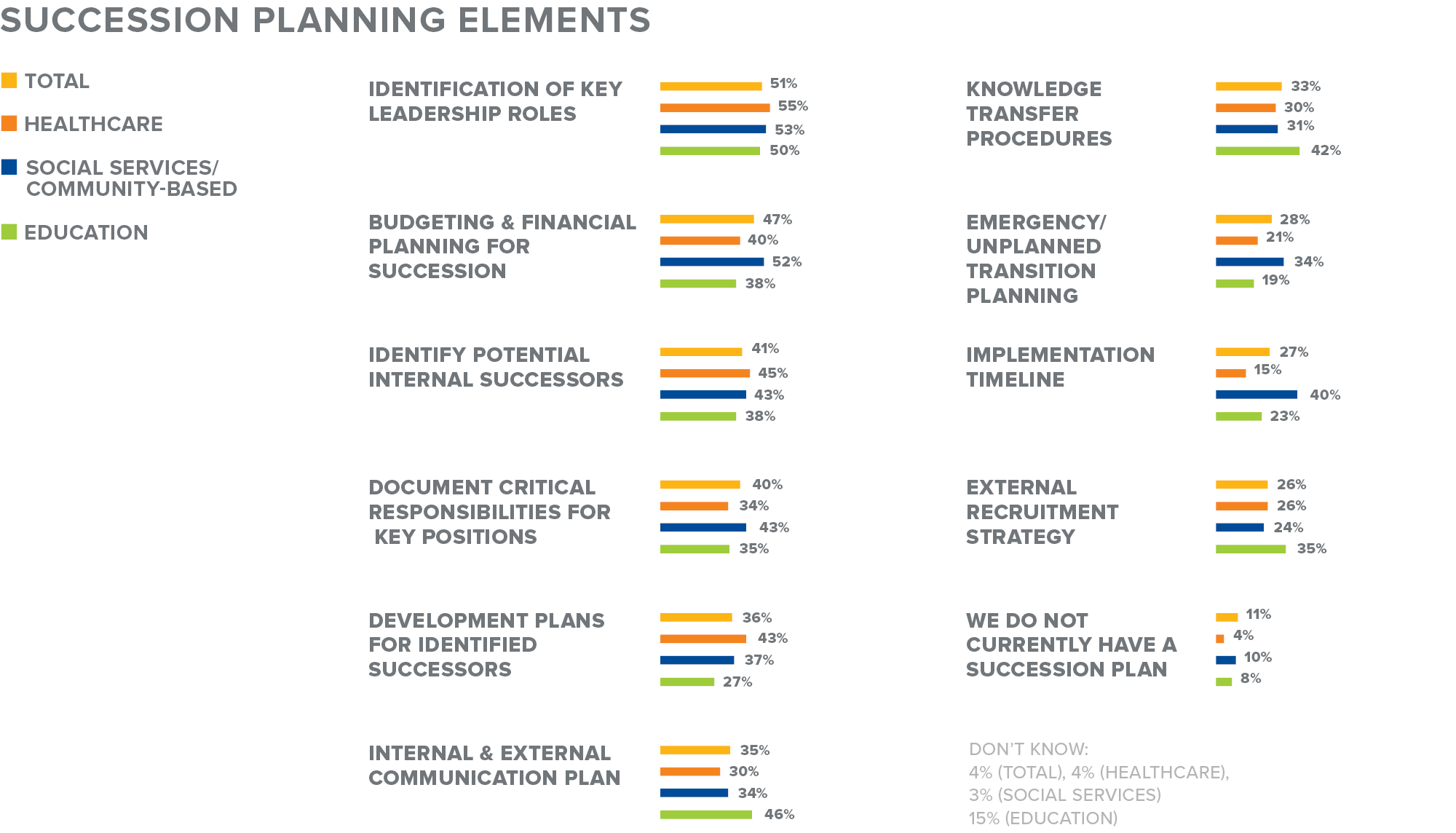
Even among organizations that consider themselves prepared, very few have identified successors for all critical roles, leaving decision-making vulnerable during a transition. While 80% of boards express confidence in their understanding of their mission, nearly 10% of nonprofits report having no succession plan in place, and only about half have identified key leadership roles or potential successors. This means that while many nonprofits have taken steps to prepare for leadership change, most have yet to build more robust development pathways.
The data also shows that many nonprofits face practical barriers that slow progress, including limited time, limited resources and the absence of a strong leadership pipeline. These challenges often make it difficult to move from planning to implementation, especially when leadership development is not embedded into everyday practices. Organizations that can close these gaps and place greater emphasis on leadership development will be better prepared for transition readiness in the long term.
Internal Development as a Continuity Driver
Though developing future leaders within an organization requires consistency and intention, the benefits are significant. Internal candidates bring a level of organizational fluency and a connection to the mission and culture that often takes years to build.
At a time when organizations are competing for a limited pool of skilled professionals, strong leadership development programs can also be a powerful tool for strengthening engagement and reducing turnover. When employees see clear advancement pathways and recognize that the organization invests in its people, they feel more motivated and engaged.
For these reasons, internal talent development is most effective when it is treated as an organizational priority. When leaders recognize potential early and give rising talent the tools they need to thrive, they build a strong pipeline of employees that supports the organization’s overarching mission and strengthens continuity during times of transition.
Practical Ways to Identify and Nurture Future Leaders
Every nonprofit has talented employees with the potential to become strong leaders. However, they need guidance, support and meaningful opportunities to develop their skills. By identifying these individuals early and investing in their growth, organizations can build a reliable pipeline of future leaders.
Consider these practical strategies to cultivate your next generation of leadership talent:
- Recognize potential, not just position: Look for employees who demonstrate curiosity, initiative and a willingness to tackle challenges, even if they don’t currently hold formal leadership roles. Those who ask insightful questions and seek ways to improve processes often display early signs of leadership potential.
- Involve emerging leaders in organization-wide initiatives: Invite rising talent to participate in committees, task forces or cross-functional departments. Collaborating with colleagues who bring different perspectives helps them understand organizational dynamics and contribute to solutions that advance the mission.
- Provide stretch assignments to expand skills and perspectives: Challenge emerging leaders with new responsibilities that push them outside their comfort zones and expose them to different aspects of the organization. Leading a cross-departmental initiative, launching a new program or presenting to the board can build confidence and showcase their capabilities.
- Pair rising leaders with mentors to guide them: Create opportunities for future leaders to learn from seasoned colleagues through formal mentoring programs or a culture that encourages cross-functional collaboration. These relationships provide valuable context, guidance and wisdom to help rising talent navigate challenges and prepare for future roles.
- Make knowledge transfer a structured part of leadership development: Protect valuable institutional knowledge by establishing consistent practices for how information is captured and shared. Document key workflows, map decision-making steps and cross-train on responsibilities to deepen understanding of essential functions.
Embedding Leadership Readiness into Culture
Succession planning is ultimately about people, and its strength is shaped by the culture an organization builds around growth and readiness. By making leadership development a shared responsibility that is supported across teams, departments and levels of management, nonprofits can create an environment where nurturing future leaders is woven into the fabric of their everyday work.
Advance Your Succession Strategy with Grassi’s Nonprofit Advisors
Grassi’s nonprofit advisors understand the unique challenges nonprofits face in developing and retaining leadership talent. Our team can help you design a succession planning framework tailored to your organization’s needs, drawing on our extensive experience and insights from across the sector.
Access our latest benchmarking data, trends and analysis to inform your leadership planning and prepare for the year ahead:

To learn more about how Grassi can support your succession planning efforts and overall organizational strategy, contact David M. Rottkamp or a Grassi Advisor today.
Frequently Asked Questions
Why should nonprofits prioritize leadership development? Developing leaders from within preserves institutional knowledge, strengthens mission alignment and reinforces stakeholder trust. Investing in employee growth builds continuity and reduces the risks often associated with leadership transitions.
Why do nonprofits struggle to build an internal leadership pipeline? Many organizations focus their limited time and resources on program delivery, leaving little capacity for long-term planning. Without consistent processes or clear ownership, leadership development efforts can stall and create gaps during a transition.
How can smaller nonprofits strengthen succession planning without additional budget? Simple, intentional practices— such as documenting key workflows, sharing responsibilities across teams and establishing informal mentoring — can meaningfully support continuity and build readiness over time.
How can nonprofits maintain stability when a long-serving leader departs? Consistent knowledge transfer, clear role documentation and regular cross-training help ensure critical information remains accessible and that teams stay aligned through any transition.
