

Even among the many financial and operational demands of running a franchise, employment and labor law compliance should remain a core focus for franchise and restaurant operators. Mistakes that may seem minor, such as a small tip credit miscalculation or an error on a wage statement, can create legal and reputational exposure, affecting stability and threatening operations.
Franchise and restaurant employers are now facing a series of employment law updates that introduce new compliance, tracking and notice requirements. Staying aligned with these updates helps operators reduce risk, avoid costly missteps and maintain consistency across locations.
Below, we share insights from our webinar, “2026 Employee Law Changes: What Franchise and Restaurant Operators Need to Know,” featuring Grassi Franchise Services Co-President Diana Mead and employment law advisor Brianne Murphy.
The Employment Law Landscape Today: A Focus on Local Compliance
Federal agencies, including the U.S. Equal Employment Opportunity Commission (EEOC) and the National Labor Relations Board (NLRB), continue to focus on wage documentation, scheduling, employee classification and leave recordkeeping.
While 2026 has brought few major changes at the federal level, enforcement activity is increasing, and many of the most significant changes are occurring at the state and municipal levels. Franchise and restaurant operators should take a localized approach, ensuring payroll, policies and manager practices reflect requirements in each operating jurisdiction.
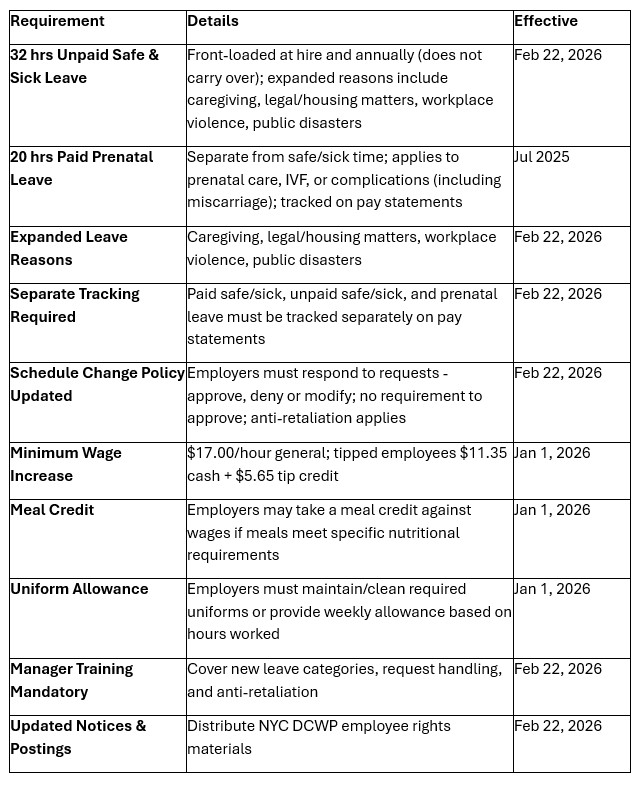
Key Updates to New York City Employment Law in 2026
New York City is one of the world’s most dynamic operating environments, with requirements that evolve frequently and often extend beyond state and federal rules.
Key changes New York operators should be aware of include:
Key Compliance Actions for Franchise and Restaurant Operators
As employment law requirements become more localized and operational, proactive review is essential. Franchise and restaurant operators should regularly evaluate payroll processes, policies and manager practices to maintain consistency and strengthen compliance.
Focus on the following actions:
- Review payroll and tip credit setup regularly. Validate wage statements, tip credit configuration and payroll inputs, recognizing that payroll providers process existing setups and may not identify configuration errors.
- Standardize manager training. Provide practical guidance on leave handling, documentation expectations and employee communication so managers respond consistently across locations.
- Align policies with daily operations. Ensure written policies reflect day-to-day practices across locations and update them when processes change.
- Implement clear leave tracking processes. Ensure paid, unpaid, and other types of leave categories are recorded accurately and reflected correctly on pay statements.
- Maintain posting oversight. Assign responsibility for monitoring required notices and use tools or reminders to keep postings current.
By applying these practices, operators can reduce operational risk while supporting a thriving workforce.
Supporting Your Franchise’s Compliance Needs
Managing franchise employment law compliance requires coordination across payroll, policies, training and reporting. For many operators, these responsibilities sit alongside daily operational demands.
Grassi Franchise Services supports franchise and restaurant operators with guidance to strengthen compliance, improve consistency across locations, and reduce disruption tied to evolving requirements.
For additional perspective on the 2026 employment law updates and practical examples discussed during the session, watch the webinar replay.
FAQs
Q: What is franchise employment law compliance?
A: Franchise employment law compliance refers to aligning payroll practices, policies, manager training, and documentation with federal, state, and local employment regulations.
Q: What New York City employment law updates should franchise and restaurant operators prioritize?
A: Operators should prioritize updates to earned safe and sick time requirements, paid prenatal leave, wage statement expectations, scheduling rules and posting obligations. Because New York City requirements often expand beyond state and federal standards, these changes can significantly impact franchise employment law compliance across multi-location operations.
Q: What employment law changes matter most for franchise and restaurant operators in 2026?
A: Operators should focus on payroll accuracy, tip credit configuration, leave tracking, manager training and local posting requirements, as these areas frequently drive employment law risk.
Q: How can Grassi Franchise Services help with franchise employment law compliance?
A: Grassi Franchise Services provides comprehensive advisory support to help franchise and restaurant operators strengthen franchise employment law compliance, improve consistency across locations, and reduce operational disruption as requirements evolve.
