
As nonprofits plan for 2026, technology investments are playing an increasingly important role in how organizations deliver services, manage risk and demonstrate impact. Findings from our 2025–26 Nonprofit Leadership Report reveal how nonprofits across the sector are approaching technology adoption, offering a practical reference point for leaders evaluating priorities for the year ahead.
Across the sector, nonprofits are prioritizing core systems and foundational capabilities that improve operational efficiency and create more reliable data environments. By strengthening these foundations, leaders are better positioned to use data more effectively, explore practical AI applications and implement cybersecurity practices that keep pace as the technology evolves.
Current and Planned Technological Investments for Nonprofits
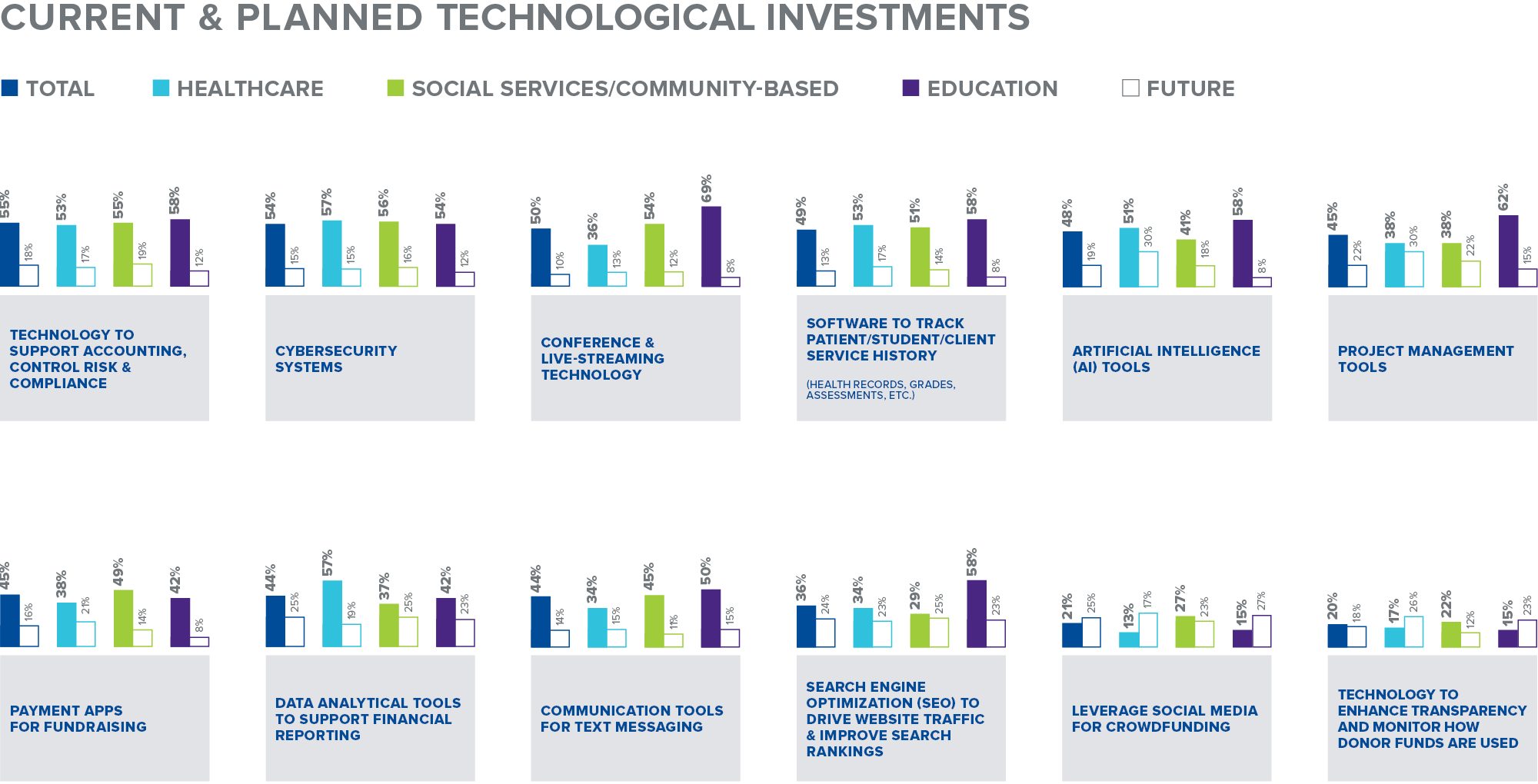
According to our survey data from more than 200 leaders across the sector, nonprofits continue to leverage technology to improve efficiency, consistency and visibility across daily operations and reporting. Accounting, compliance and risk management tools are the most widely adopted solutions, reflecting a sector-wide emphasis on governance and oversight.
Many organizations have also made substantial investments in cybersecurity systems, data storage solutions and virtual collaboration tools as they move toward more connected, integrated technology environments. With a greater focus on data and analytics, many leaders have prioritized implementing integrated ERP platforms, shifting away from standalone general ledger systems and strengthening the foundation for more consistent reporting and future innovation.
Leveraging Data and Analytics to Support Mission Delivery
Nonprofit organizations are increasingly leveraging data and analytics to improve service delivery and engagement. Survey responses show growing adoption of software that tracks patient, student and client service histories, including health records, grades and assessments. These tools allow organizations to evaluate outcomes over time, identify trends and tailor services more effectively to community needs.
The application of this data varies by mission and operating model:
- Healthcare nonprofits utilize service history data, analytics tools, and automated case note capabilities to improve care coordination.
- Education organizations are using participation, performance, and engagement data to enhance instruction, monitor progress, and guide program design.
- Social services and community-based nonprofits are applying client data and engagement metrics to evaluate program effectiveness, allocate resources more efficiently, and demonstrate impact to funders.
This shift reflects a broader emphasis on using data not only for reporting, but also to guide decisions, refine services and strengthen mission outcomes.
Practical AI Use Cases for Nonprofits
AI adoption among nonprofits increased from 31% in 2024 to 48% in 2025, representing a significant year-over-year increase. Within the next year, another 19% of organizations plan to adopt AI, bringing adoption close to two-thirds of the sector.
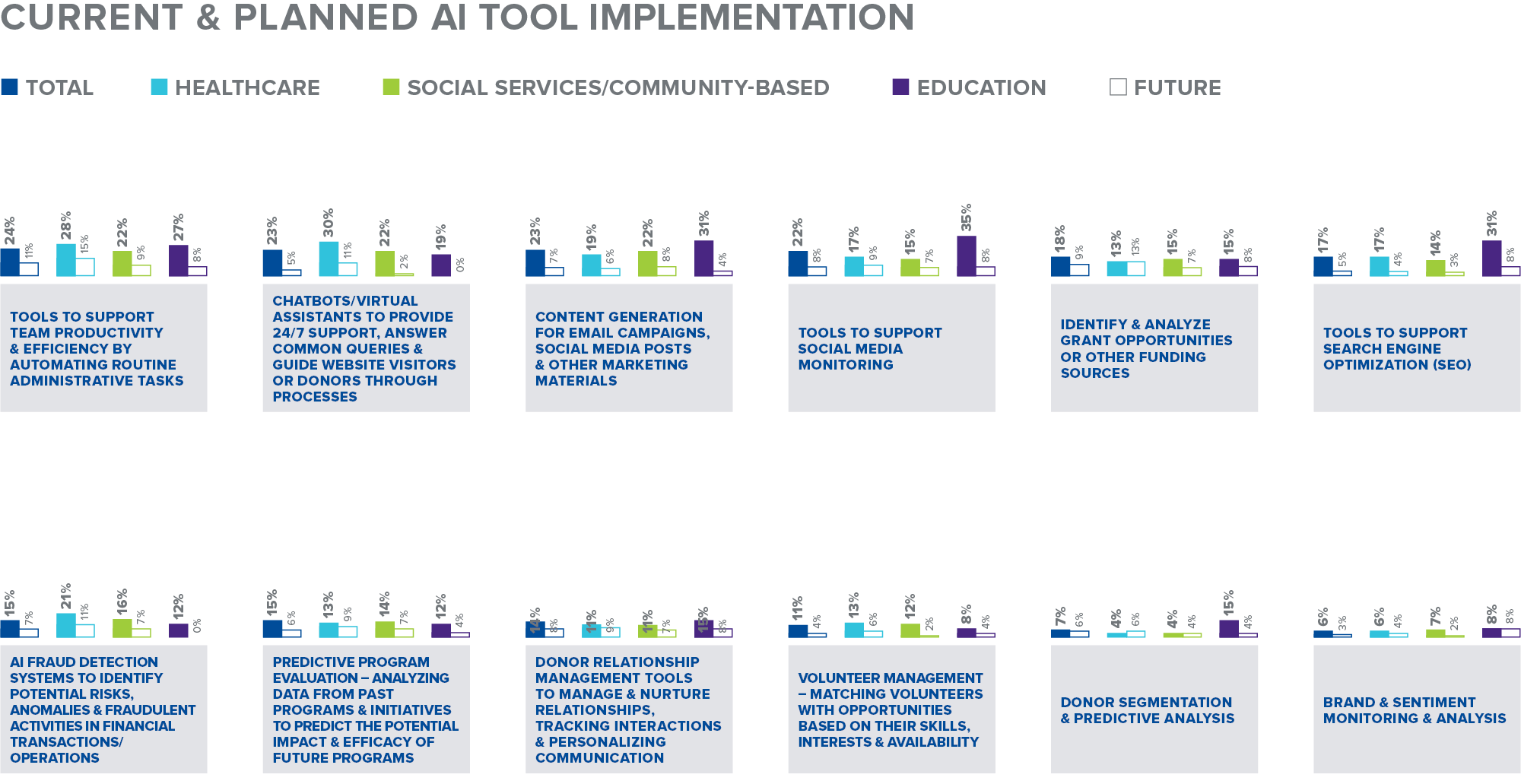
The most common use case for AI today is automating routine administrative tasks, freeing staff to focus on higher-value, mission-driven work. Nearly a quarter of organizations also report using chatbots and virtual assistants to provide website support, assist donors, generate marketing content and support social media sentiment analysis.
As nonprofits strengthen the quality and visualization of their data, many organizations are beginning to build on that foundation through machine learning, which uses historical data to identify patterns and support prediction, and early forms of agentic AI, a newer class of systems designed to carry out multi-step tasks based on defined objectives.
With more sophisticated data foundations in place, AI is beginning to support more complex, insight-driven activities, including:
- Fundraising and donor strategy, using machine learning to analyze donor databases and support more targeted segmentation.
- Communications and public engagement, through brand and sentiment analysis that helps organizations understand public perception and respond to emerging issues.
- Program and operational planning, applying historical data to identify patterns that inform outreach, resource allocation, and service design.
As adoption grows, leaders are increasingly focused on ensuring cybersecurity, governance and internal readiness evolve alongside AI capabilities.
Critical Cybersecurity Risks to Address
Our Nonprofit Leadership Report reveals a clear confidence gap among nonprofits when it comes to cybersecurity. Fifty-six percent of nonprofit leaders report being only somewhat confident in their ability to protect sensitive data, while just 38% say they are very confident.
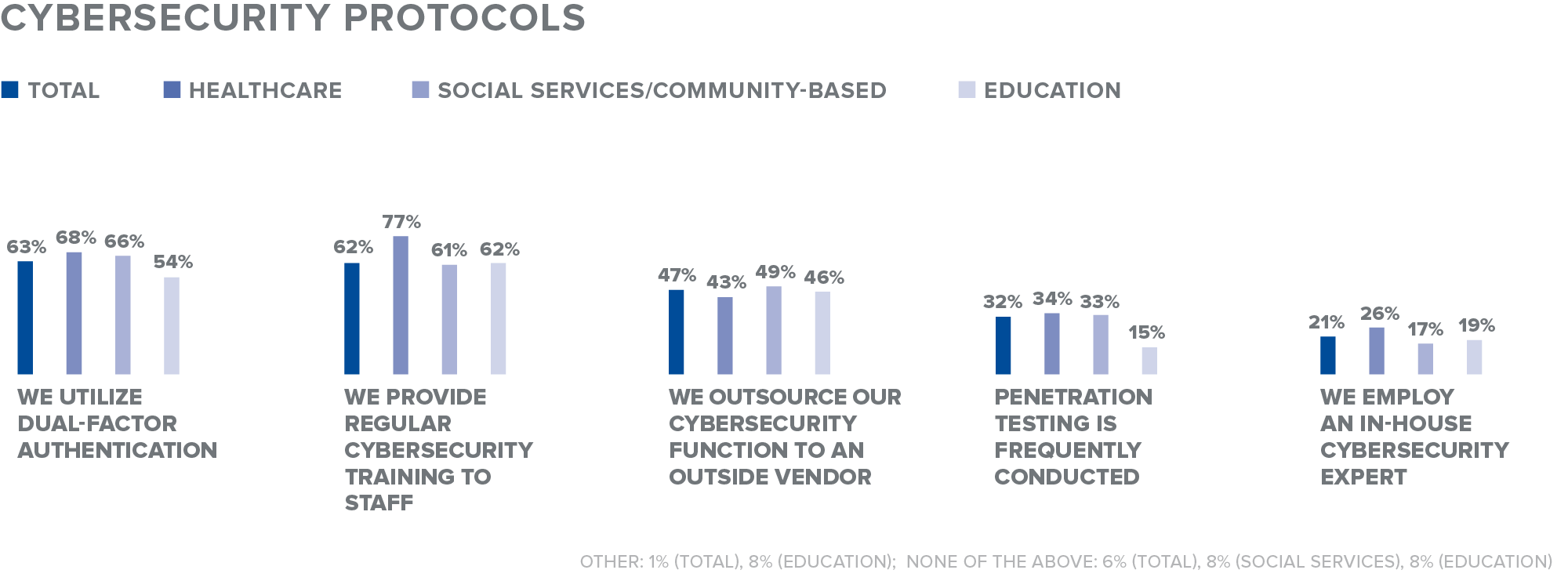
While many nonprofits have implemented baseline cybersecurity protections, the survey shows that more advanced safeguards are not yet consistently in place across the sector:
- Dual-factor authentication and regular cybersecurity training are widely adopted and represent the most common controls in place today.
- Nearly half of organizations outsource cybersecurity functions, reflecting limited internal capacity.
- Only one-third conduct penetration testing regularly, despite its role in identifying vulnerabilities before incidents occur.
The data suggests that nonprofits are taking important first steps, but many are still building the skills, controls and governance structures needed to securely support more integrated systems, advanced analytics, and AI.
Building a Technology Roadmap for 2026
As nonprofit leaders plan investments across data, analytics, AI and cybersecurity, a technology roadmap helps bring these priorities together. By assessing current systems, data quality and governance practices, leaders can better understand how future investments should be sequenced to minimize risk and maximize mission impact.
Discuss Your 2026 Technology Strategy with Grassi
Grassi’s experienced Nonprofit and Technology advisors collaborate closely with organizations to assess their digital readiness, craft tailored technology roadmaps, and implement critical governance, financial, and cybersecurity practices. Download the 2025-26 Nonprofit Leadership Report or watch the webinar recap today to learn how peer organizations across the sector are approaching technology planning for 2026.
To continue the conversation and explore what these insights mean for your organization’s 2026 planning, connect with a Grassi advisor today.
Frequently Asked Questions
What technology investments are nonprofits prioritizing for 2026? Nonprofits are prioritizing technology that supports accounting, compliance and risk management, along with cybersecurity, data storage and integrated systems that strengthen oversight and operational stability.
How are nonprofits using data and analytics today? Nonprofits are using data and analytics to support financial reporting, track patient, student and client service history, evaluate outcomes and inform program and engagement decisions across the organization.
What role does AI currently play in nonprofit operations? AI is most commonly used to automate routine administrative tasks and support productivity. More advanced applications, including machine learning and early agentic AI, are emerging more selectively as data foundations mature.
How can Grassi help nonprofits plan technology investments for 2026? Grassi helps nonprofits assess digital readiness, evaluate current systems and data practices, and develop technology roadmaps aligned with mission, governance and risk considerations. Drawing on sector insights and hands-on advisory experience, Grassi supports organizations as they strengthen core systems, improve data and analytics capabilities, address cybersecurity risks and plan technology investments with confidence.
